Bunaken National Park, off the coast of Manado in North Sulawesi, is one of Indonesia’s best-known scuba diving destinations. Located within the Coral Triangle, the marine park is recognised for its steep coral walls, extensive reef ecosystems, frequent turtle encounters and diverse tropical marine life.
The best Bunaken diving spots range from sheltered coral gardens and macro-focused reefs to drift dives and deeper current-swept walls. Because most sites are underwater reef sections rather than fixed attractions, exact entry points and dive profiles can vary depending on currents, sea conditions and the assessment of the local dive operator.
For travellers looking to combine Bunaken with a wider journey through the archipelago, Indonesia Impression Tour creates tailor-made trips across Indonesia around individual interests and travel plans.
Bunaken Dive Sites at a Glance
| Dive Site | Dive Style | Typical / Recreational Depth | Underwater Highlights | Best For |
| Lekuan III | Reef and wall | Up to 30 m | Coral gardens, steep wall, turtles, barracuda and reef fish | Turtles and first-time Bunaken divers |
| Sachiko’s Point | Sloping wall and drift | Around 25 m; wall extends deeper | Giant gorgonians, black snapper, reef sharks and eagle rays | Larger marine life and wide-angle photography |
| Fukui Point | Sloping reef | Around 3–22 m; deeper features around 30 m | Cabbage coral, giant clams, batfish, tuna and barracuda | Coral gardens and marine life |
| Ron’s Point | Current-swept reef | Shallow reef; deeper plateau around 35–40 m | Sloping reef, reef sharks, tuna, eagle rays and Napoleon wrasse | Experienced divers and larger marine life |
| Mandolin | Wall, reef and drift | Up to 30 m | Ledges, overhangs, sea fans, turtles, snapper and reef sharks | Drift diving and underwater photography |
| Celah Celah | Wall | Around 5–30 m+ | Crevices, canyons, coral formations and colourful reef fish | Reef formations and night diving |
| Alung Banua | Sandy slope and wall | Around 10–25 m | Sandy slopes, jawfish, ghost pipefish and other macro species | Macro photography and smaller marine life |
| Bunaken Timur | Coral garden and wall | Around 10–25 m | Coral gardens, turtles, fusiliers, pygmy seahorses and macro life | Coral gardens, turtles and macro diving |
Depths are indicative rather than fixed dive profiles. Actual dive depth and entry points should be selected according to certification level, currents, sea conditions and guidance from the local dive operator.
1. Lekuan III – Best for Turtles and First-Time Bunaken Divers
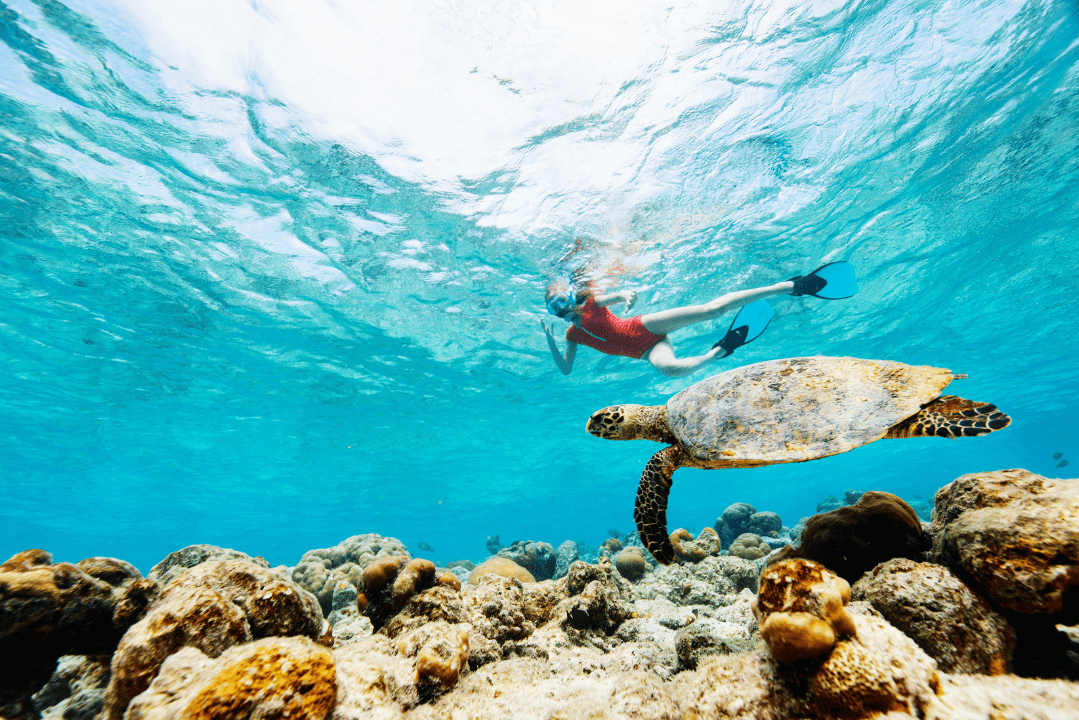
Lekuan is one of Bunaken’s signature reef systems and extends along the southern side of the island through several dive sections. At Lekuan III, shallow coral gardens and sandy slopes transition into a steep reef wall, creating varied scenery across different depths.
Turtles are one of the main attractions here, while divers may also encounter barracuda, Napoleon wrasse, eagle rays, reef sharks and large numbers of tropical reef fish. Lekuan III is generally more protected than some of Bunaken’s stronger-current sites, making it one of the more accessible choices for newer certified divers when local conditions are suitable.
- Best for: Turtles and first-time Bunaken divers
- Dive style: Reef and wall
- Depth: Up to 30 metres for recreational diving, although the wall continues much deeper.
- Location: Southern Bunaken Island, Bunaken National Park, North Sulawesi
2. Sachiko’s Point – Best for Larger Marine Life and Wide-Angle Photography
Sachiko’s Point lies on the north-eastern side of Bunaken and features a steep sloping wall covered with large gorgonians, reef formations and crevices. Schools of black snapper and red-tooth triggerfish are commonly associated with the site, while moray eels can often be found sheltering within the reef.
Reef sharks and eagle rays may also pass through the area, giving Sachiko’s Point strong potential for wide-angle underwater photography. Currents are often drift-like but can strengthen, so the final dive profile should be adjusted according to conditions on the day.
- Best for: Larger marine life and wide-angle photography
- Dive style: Sloping wall and drift
- Depth: Around 25 metres for typical dives, with the wall extending beyond 40 metres.
- Location: North-eastern Bunaken Island, Bunaken National Park, North Sulawesi
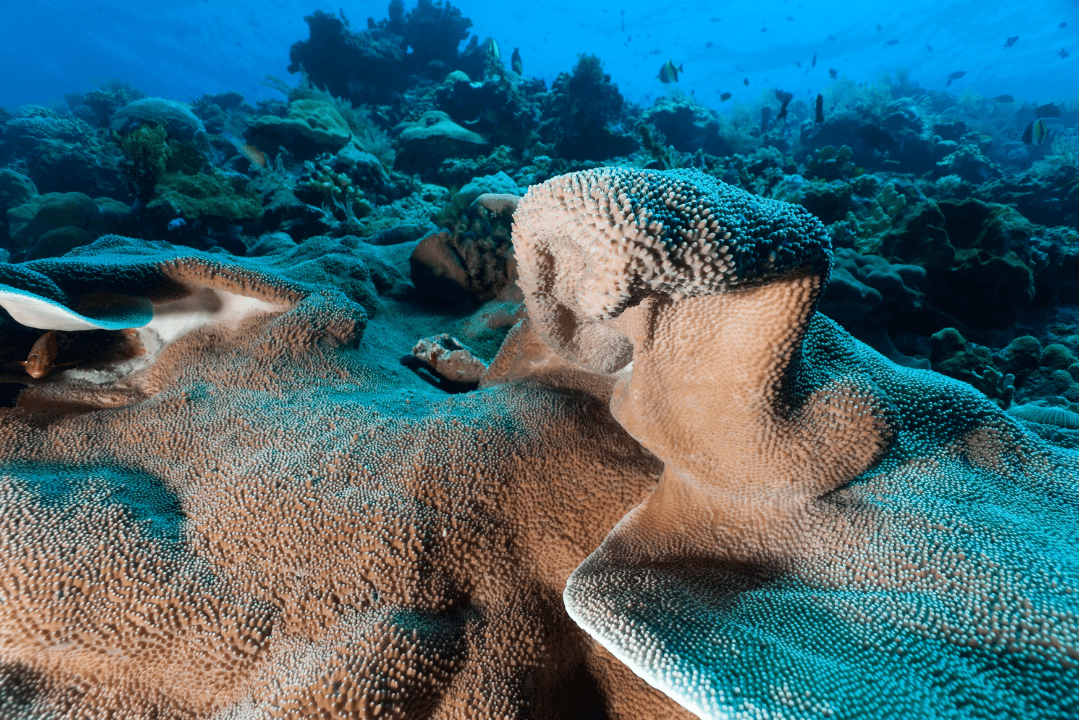
3. Fukui Point – Best for Coral Gardens, Giant Clams and Batfish
Fukui Point offers a different underwater landscape from Bunaken’s classic vertical walls. Its broad sloping reef contains extensive cabbage coral formations, sandy areas and a resident school of batfish.
Giant clams can be found at deeper sections of the reef, while tuna and barracuda frequently move through the area. A deeper sandy plateau lies at approximately 30 metres, although this should be considered an underwater feature rather than a recommended depth for every diver.
- Best for: Coral gardens, giant clams and batfish
- Dive style: Sloping reef
- Depth: Around 3–22 metres across much of the main reef, with deeper features around 30 metres.
- Location: South-western Bunaken Island, Bunaken National Park, North Sulawesi
4. Ron’s Point – Best for Larger Marine Life and Experienced Divers
Ron’s Point continues beyond Fukui along the south-western side of Bunaken. Its gently sloping reef is exposed to stronger water movement, which can bring larger pelagic and reef species into the area.
Reef sharks, tuna, eagle rays and Napoleon wrasse are among the larger species associated with Ron’s Point. Because currents can become strong and some of the site’s deeper features lie beyond standard recreational depths, the site is better suited to experienced and appropriately qualified divers.
- Best for: Larger marine life and experienced divers
- Dive style: Current-swept sloping reef
- Depth: Shallower sections are available, while the deeper plateau lies at approximately 35–40 metres.
- Location: South-western Bunaken Island, near Fukui Point, Bunaken National Park, North Sulawesi
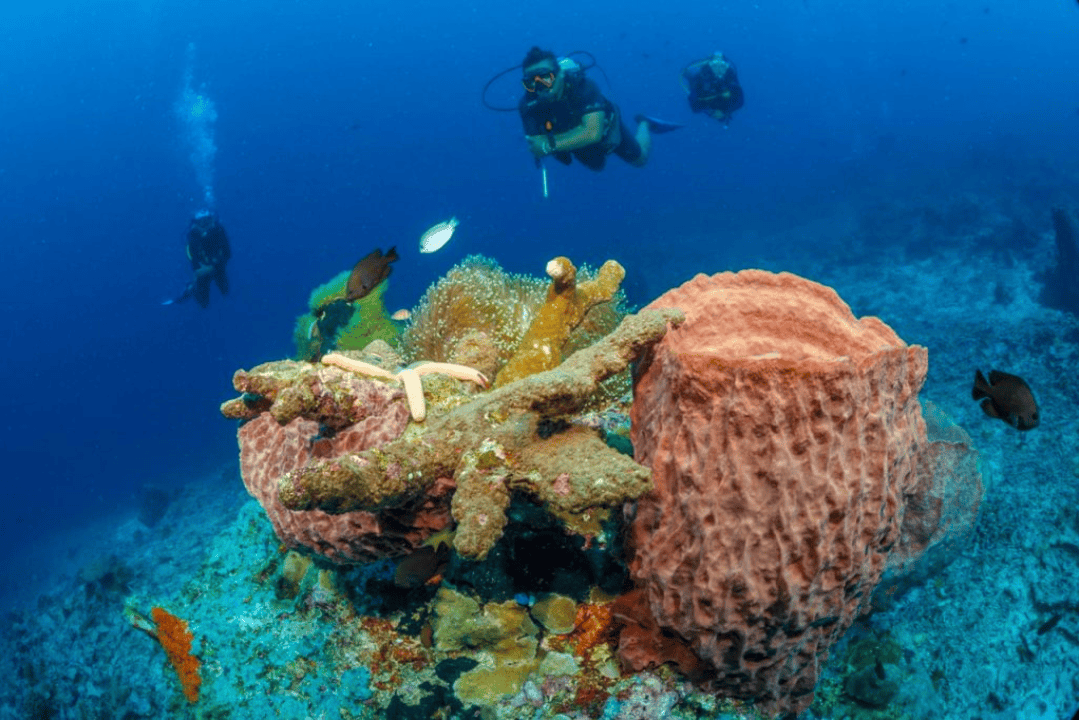
5. Mandolin – Best for Drift Diving and Underwater Photography
Mandolin is a western Bunaken dive site characterised by a steep wall with steps, ledges and overhangs. Large sponges, sea fans and black coral formations create strong underwater scenery, particularly for wide-angle photography.
Divers may encounter turtles, snapper, Napoleon wrasse, barracuda, reef sharks and eagle rays along the wall. Mandolin is commonly explored as a drift dive, with currents generally ranging from mild to moderate depending on conditions.
- Best for: Drift diving and underwater photography
- Dive style: Wall, reef and drift
- Depth: Up to 30 metres for recreational diving, although the wall continues considerably deeper.
- Location: Western Bunaken Island, Bunaken National Park, North Sulawesi
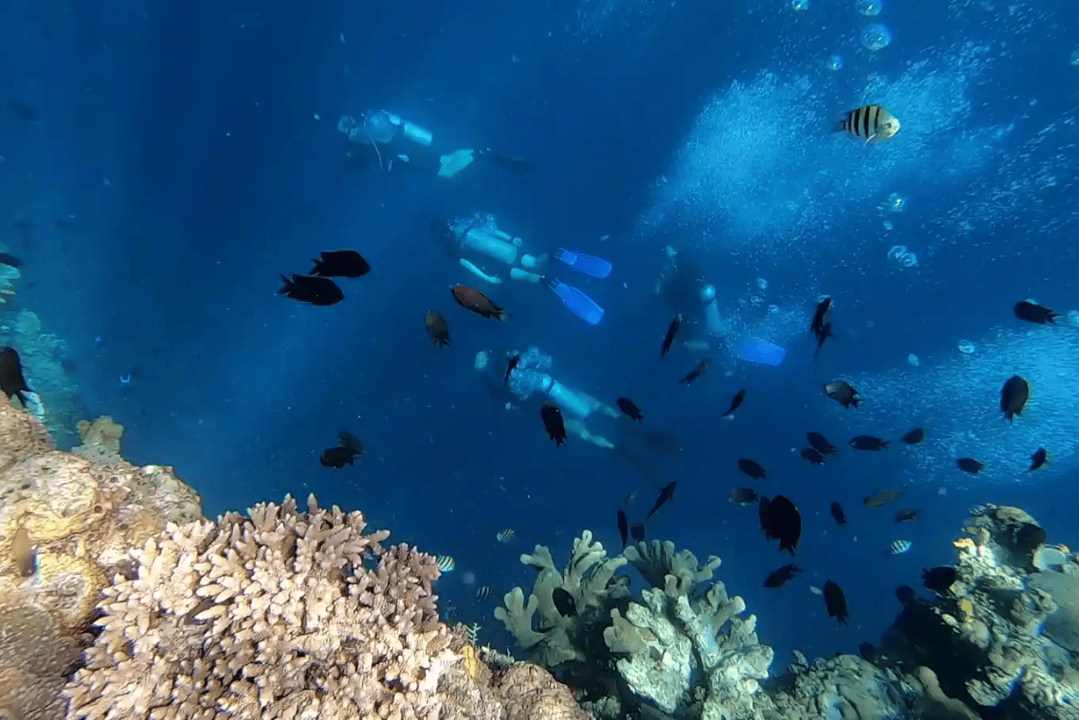
6. Celah Celah – Best for Reef Formations and Night Diving
Celah Celah is distinguished by the crevices, openings and canyon-like formations found throughout its coral wall. Sunlight passing through these openings can create particularly distinctive underwater scenery during daytime dives.
The reef supports hard and soft corals, feather stars and colourful reef species including butterflyfish, parrotfish, wrasse and triggerfish. Compared with several more exposed Bunaken diving spots, parts of Celah Celah can be relatively sheltered, while the reef structure also makes it a popular option for night diving.
- Best for: Reef formations and night diving
- Dive style: Wall dive
- Depth: Approximately 5–30 metres and deeper along the wall.
- Location: Bunaken Island, Bunaken National Park, North Sulawesi
7. Alung Banua – Best for Macro Photography and Smaller Marine Species
Alung Banua begins over a sandy slope before reaching a vertical reef wall with crevices and a distinctive chimney-like formation. The combination of sandy substrate and reef structure creates suitable habitat for smaller marine species.
Jawfish and leaf scorpionfish may be found around the sandy sections, while ghost pipefish, crinoid shrimp and other small reef species can reward slower observation along the wall. Its relatively sheltered position can also make Alung Banua useful when conditions are stronger elsewhere around Bunaken.
- Best for: Macro photography and smaller marine species
- Dive style: Sandy slope and wall
- Depth: Typically around 10–25 metres.
- Location: Southern Bunaken Island, near Alung Banua Village, Bunaken National Park, North Sulawesi
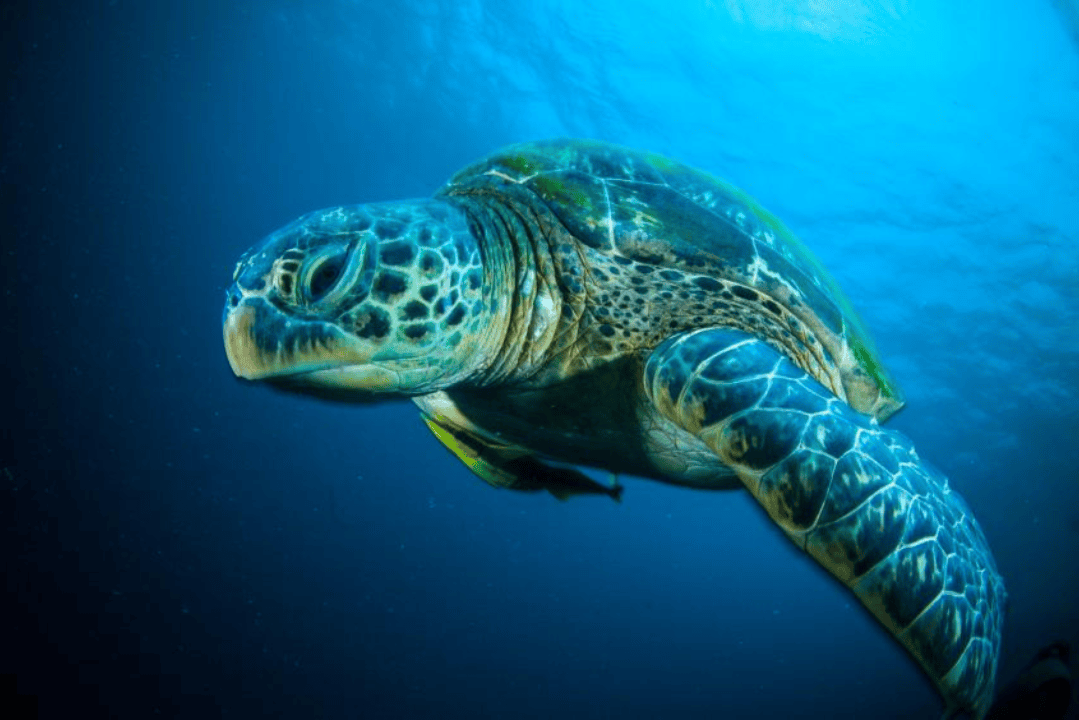
8. Bunaken Timur – Best for Coral Gardens, Turtles and Macro Life
Bunaken Timur extends along the eastern face of Bunaken and covers several reef sections rather than a single fixed underwater point. Its shallow reef contains extensive coral gardens before gradually dropping into a steeper wall.
Turtles, fusiliers and other schooling reef fish are common attractions, while smaller species such as pygmy seahorses, ghost pipefish and squat lobsters can be found by divers taking a closer look at the reef structure.
Currents are generally milder than at some of Bunaken’s more exposed sites, although conditions can still vary between individual dives.
- Best for: Coral gardens, turtles and macro life
- Dive style: Coral garden and wall
- Depth: Typically around 10–25 metres, with the wall extending to around 40 metres and deeper.
- Location: Eastern Bunaken Island, Bunaken National Park, North Sulawesi
What Makes Diving in Bunaken Special?
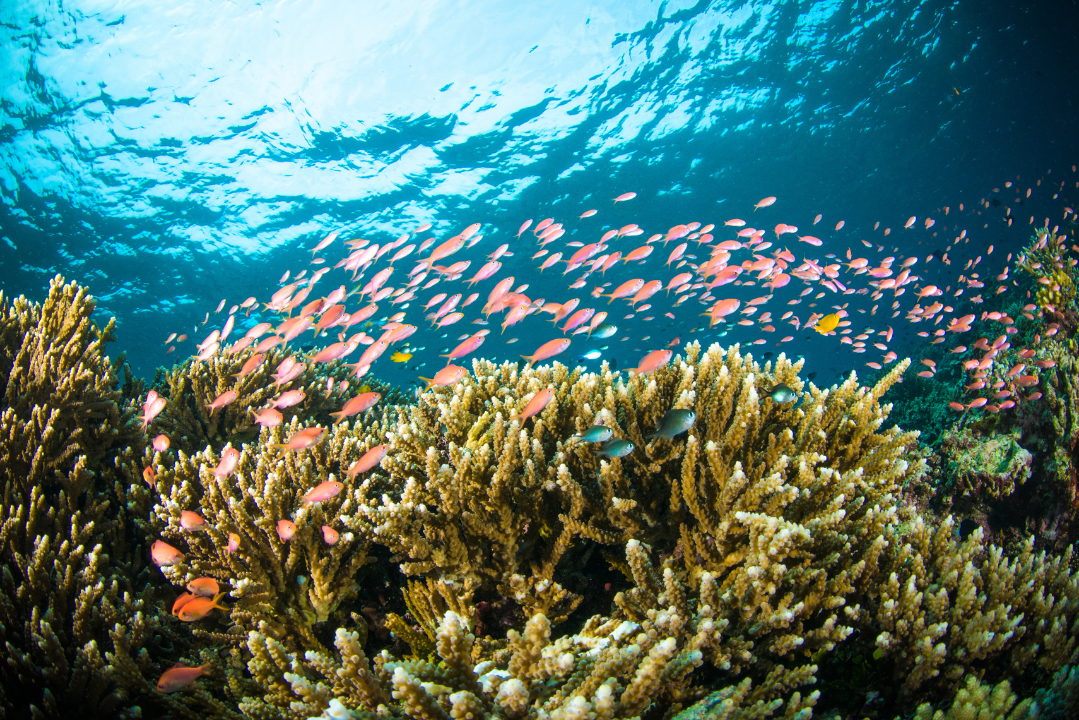
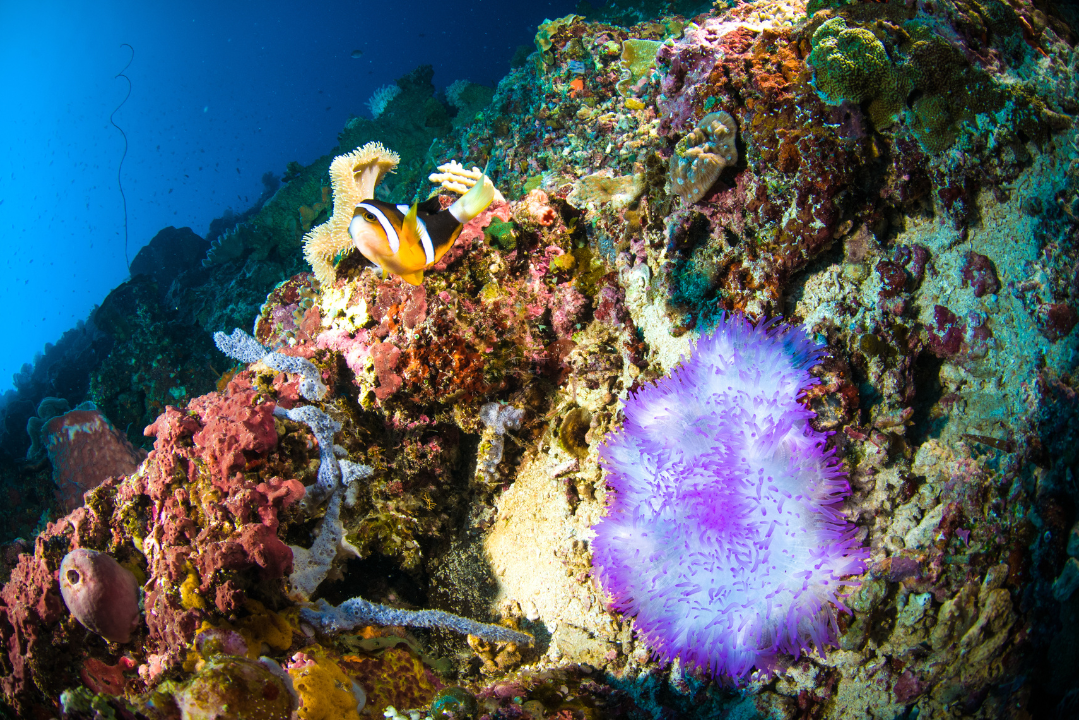
Bunaken is best known for its dramatic wall diving, healthy coral reefs and frequent turtle encounters. Many dive sites around Bunaken National Park follow steep reef walls, allowing divers to explore several depth zones while encountering both colourful reef life and larger marine species.
Key characteristics of diving in Bunaken include:
- Wall diving: Steep coral walls are one of the defining features of Bunaken’s underwater landscape.
- Healthy reef ecosystems: Hard and soft corals support a diverse range of tropical reef species.
- Turtle encounters: Green and hawksbill turtles are commonly associated with several Bunaken dive sites.
- Varied diving conditions: Divers can experience coral gardens, sheltered reefs, drift dives and stronger-current sites within the same marine park.
- Diving for different interests: Bunaken offers opportunities for wide-angle photography, macro diving, marine-life encounters and deeper reef exploration.
Bunaken is only one of several major dive regions in Sulawesi. Divers comparing different underwater environments can also explore the brand’s guide to the best diving spots in Wakatobi, where reef systems and dive conditions offer a different experience in south-eastern Sulawesi.
Bunaken Diving Conditions and Best Time to Visit
April to November is generally a suitable period for diving in Bunaken, although conditions can vary from one dive site to another and from day to day.
- Best period for diving: April to November generally provides favourable conditions for diving and snorkelling around Bunaken.
- Drier months: May to October broadly corresponds with the drier period across much of Sulawesi.
- Site selection: Dive sites should be selected according to daily sea conditions, current strength, certification and diver experience rather than a fixed itinerary.
Divers should confirm conditions with their local dive operator before each dive, particularly when considering deeper or stronger-current sites.
How to Get to Bunaken
The easiest way to reach Bunaken National Park is via Manado, the main gateway to North Sulawesi. From Manado, travellers continue by boat to Bunaken Island and the surrounding diving areas.
- By boat from Manado: Public boats and private transfers connect Manado with Bunaken, with schedules and departure points varying by operator.
- By organised transfer: Dive resorts and tour operators can arrange direct boat transfers, which can be more convenient for travellers carrying diving equipment or following a planned dive itinerary.
For travellers who prefer to have accommodation, local transport and the Bunaken portion of their North Sulawesi journey arranged together, Indonesia Impression Tour’s Explore Manado in North Sulawesi itinerary provides a practical starting point for exploring the region.
If you plan to spend additional time in the region beyond diving, the guide to things to do in Sulawesi covers other marine, wildlife, cultural and highland experiences that can be combined with Bunaken.
Plan Your Bunaken Diving Trip with Indonesia Impression Tour
The best Bunaken diving itinerary should be planned around your certification level, diving experience, preferred marine life, travel dates and daily sea conditions. Currents, suitable depths and underwater visibility can vary between sites, so a flexible itinerary is generally more useful than following a rigid checklist.
Travellers can choose several days around Bunaken for dedicated diving or incorporate North Sulawesi into a broader Indonesia journey depending on available time and other destinations they want to visit.
Planning to dive in Bunaken? Explore Indonesia Impression Tour’s Diving Indonesia experiences to create a personalised journey around your diving level, preferred destinations and travel dates.
FAQs About Bunaken Diving
What Are the Best Bunaken Diving Spots?
Lekuan III, Sachiko’s Point, Fukui Point, Ron’s Point, Mandolin, Celah Celah, Alung Banua and Bunaken Timur are among the established diving areas around Bunaken Island, offering a mix of wall dives, coral gardens, drift diving and marine-life encounters.
Which Bunaken Dive Site Is Best for Turtles?
Lekuan III is one of the strongest choices for turtle encounters in Bunaken. Green and hawksbill turtles are regularly associated with the Lekuan reef system, although wildlife encounters can never be guaranteed.
Which Bunaken Dive Site Is Best for Beginners?
Lekuan III is one of the more suitable Bunaken diving spots for newer certified divers when conditions are calm. Its relatively protected setting and generally lighter currents make it more approachable than stronger-current sites.
Which Bunaken Dive Sites Are Better for Experienced Divers?
Ron’s Point is better suited to experienced divers, particularly when currents are strong or deeper sections are included in the dive plan. Mandolin may also be explored as a drift dive and should be selected according to current conditions and diver experience.
How Deep Are the Dive Sites in Bunaken?
Many recreational dives around Bunaken take place within approximately 10–30 metres, although individual sites vary considerably. Some walls and deeper reef features extend beyond standard recreational limits, so the actual dive profile should always match certification and experience.
Do Bunaken Dive Sites Have Google Maps Locations?
Not all Bunaken dive sites have reliable standalone Google Maps pins. Many are underwater reef sections or walls rather than fixed land-based attractions, and exact entry points may change according to current direction and local dive conditions.
The sites listed in this guide are located around Bunaken Island within Bunaken National Park, North Sulawesi.
Is Bunaken Suitable for Beginner Divers?
Yes, Bunaken can be suitable for beginner divers when appropriate sites and conditions are selected. More protected areas such as Lekuan III may suit newer certified divers, while stronger-current and deeper sites should be reserved for divers with suitable experience and qualifications.