Mount Rinjani trekking is one of the most rewarding mountain adventures in Indonesia, combining open savanna, volcanic ridges, crater-rim camps, the 3,726-metre summit and the dramatic landscape surrounding Segara Anak Lake. Located in Lombok, Mount Rinjani is Indonesia’s second-highest volcano and one of the country’s most recognised trekking destinations.
Rinjani is not a casual hike. Summit routes involve substantial elevation gain, long trekking days, cold pre-dawn temperatures, loose volcanic scree and steep descents. Choosing the right route, preparing your fitness and understanding current National Park regulations are essential before committing to the climb.
This Mount Rinjani trekking guide compares the main routes, difficulty levels, permits, costs, trailheads, best trekking season, packing essentials and practical travel planning to help you choose the Rinjani experience that fits your fitness and available time.
If Rinjani is part of a wider island trip, explore more things to do in Lombok beyond the mountain.
Mount Rinjani Trekking at a Glance
| Travel Information | Details |
|---|---|
| Summit elevation | 3,726 metres above sea level |
| Location | Gunung Rinjani National Park, Lombok, West Nusa Tenggara |
| Main summit trailhead | Sembalun |
| Other popular trailheads | Senaru and Torean |
| Typical trekking duration | 2 days 1 night to 4 days 3 nights |
| Best for | Fit hikers, adventure travellers and experienced trekkers |
| Difficulty | Challenging to very challenging depending on route |
| Main highlights | Rinjani Summit, Sembalun Crater Rim, Segara Anak Lake, hot springs and volcanic landscapes |
| Best trekking period | Generally April to October, subject to official route openings and weather conditions |
Current Mount Rinjani Trekking Status
Updated October 2026: Gunung Rinjani National Park has been operating under a limited-opening policy since 1 September 2026 because of elevated forest-fire risk. New online bookings through eRinjani have been temporarily suspended until conditions are considered safe for normal reopening, while bookings paid before the restriction remain subject to existing National Park arrangements.
Conditions can change quickly. Check the latest Gunung Rinjani National Park announcement and confirm your trekking arrangements before finalising flights, hotels or transfers.
Which Mount Rinjani Trek Is Best for You?
| Route | Duration | Summit | Segara Anak Lake | Best For | Difficulty |
|---|---|---|---|---|---|
| Senaru Crater Rim | 2D1N | No | Viewed from crater rim | Shorter Rinjani trekking experience | Challenging |
| Sembalun Summit | 2D1N | Yes | No | Very fit, summit-focused hikers | Very challenging |
| Summit, Lake & Hot Springs | 3D2N | Yes | Yes | Classic complete Rinjani experience | Very challenging |
| Extended Full Trek | 4D3N | Yes | Yes | Experienced hikers wanting a slower pace | Challenging to very challenging |
For most well-conditioned travellers who want to experience more than the summit, the 3 days 2 nights Mount Rinjani trek provides the strongest balance between time and scenery. It combines the 3,726-metre summit with Segara Anak Lake and the hot springs.
The 2-day Sembalun route is better for hikers whose main priority is the summit, while the Senaru Crater Rim route provides an alternative for travellers who want a substantial Rinjani trek without attempting the true summit.
How Much Does Mount Rinjani Trekking Cost?
The cost of a Mount Rinjani trekking package depends on the route, number of trekking days, group size, private or shared arrangement and the level of service included. Longer routes cost more because they require additional guide and porter support, meals, camping equipment and time inside the National Park.
As of October 2026, Indonesia Impression Tour lists two representative 3-day Rinjani programs:
| Trekking Program | Duration | Listed Price | Main Experience |
|---|---|---|---|
| Mount Rinjani Expedition Trekking | 3 Days | From USD 350 | Senaru, crater rim and Segara Anak Lake |
| Mount Rinjani Summit Trekking Tour | 3 Days | From USD 375 | Rinjani summit and Segara Anak Lake |
Tour prices can change according to travel date, group size and service arrangements. Check the current package page before booking.
What Is Usually Included in a Rinjani Trekking Package?
A properly organised Rinjani trekking package will typically arrange most of the mountain logistics, although inclusions differ between operators and packages.
- National Park registration and trekking permits
- Mountain guide and required support team
- Porter support according to the trekking program
- Tents and camping equipment
- Meals and drinking water during the trek
- Pre-trek briefing
- Trailhead transfers when specified in the package
Before booking, confirm whether pre-trek accommodation, airport or hotel transfers, personal trekking equipment, trekking poles and post-trek transfers are included in your specific package.
How Difficult Is Mount Rinjani Trekking?
Mount Rinjani is a strenuous multi-day trek rather than a technical climb. Most routes do not require ropes or mountaineering equipment, but the combination of altitude, long hiking days and unstable volcanic terrain makes the mountain physically demanding.
The summit push is generally the hardest section. Trekkers leave camp before dawn and climb steeply across loose volcanic scree towards the 3,726-metre summit. Progress can be slow because the surface moves beneath your feet, while cold temperatures, wind and thinner air increase the physical effort.
The descent should not be underestimated either. Long downhill sections can place significant pressure on the knees, particularly after the summit when hikers are already fatigued.
How Fit Do You Need to Be for Mount Rinjani?
Trekkers should arrive with good cardiovascular fitness, leg strength and previous mountain-hiking experience. Current National Park guidance specifically requires hikers to have experience climbing another mountain.
In the weeks before travelling, useful preparation includes:
- long uphill walks or hikes;
- stair climbing and sustained cardio training;
- squats, lunges and leg-strength exercises;
- walking with a loaded daypack;
- controlled downhill hiking where possible;
- back-to-back training days to prepare for multi-day fatigue.
Training cannot eliminate altitude or mountain conditions, but better fitness gives you more capacity to manage the summit climb and long descent safely.
Mount Rinjani Permits and Official Trekking Requirements
Mount Rinjani lies inside Gunung Rinjani National Park, so trekking is regulated and visitors must follow current National Park procedures.
- Official registration: trekking registration and ticketing are normally managed through the eRinjani system when online booking is operating.
- Minimum group: current 2026 guidance requires at least two trekkers in a group.
- Previous mountain experience: hikers are required to have previous mountain-hiking experience that can be demonstrated where requested.
- Guide requirement: trekkers must follow current National Park requirements regarding guides and authorised trekking services.
- Health documentation: the trekking SOP requires a health certificate issued no more than three days before the trek.
- Age requirements: trekkers under 17 require appropriate accompaniment and parental or guardian permission under current park guidance.
- Reusable containers: reusable food and drink containers are required as part of waste-reduction measures.
Do not rely on rules from a previous trekking season. Park procedures, quotas and safety measures can be revised, so current requirements should always be confirmed before departure.
When Is the Best Time to Trek Mount Rinjani?
The best time for Mount Rinjani trekking is generally during Lombok’s drier months, approximately April to October. Trails tend to be more stable, camping conditions are more manageable and clear weather provides better opportunities for views across the crater and surrounding islands.
July and August are among the more popular trekking months, so routes and trekking services can be busier. Shoulder periods such as May, June, September and October can provide a useful balance between drier conditions and fewer peak-season visitors, although mountain weather remains unpredictable.
Rinjani is not guaranteed to remain open simply because you travel during the dry season. Routes can close because of severe weather, wildfire risk, landslides, volcanic activity or conservation requirements.
For example, all official Rinjani trekking routes were closed between 1 January and 31 March 2026 for hydrometeorological-risk mitigation and ecosystem recovery.
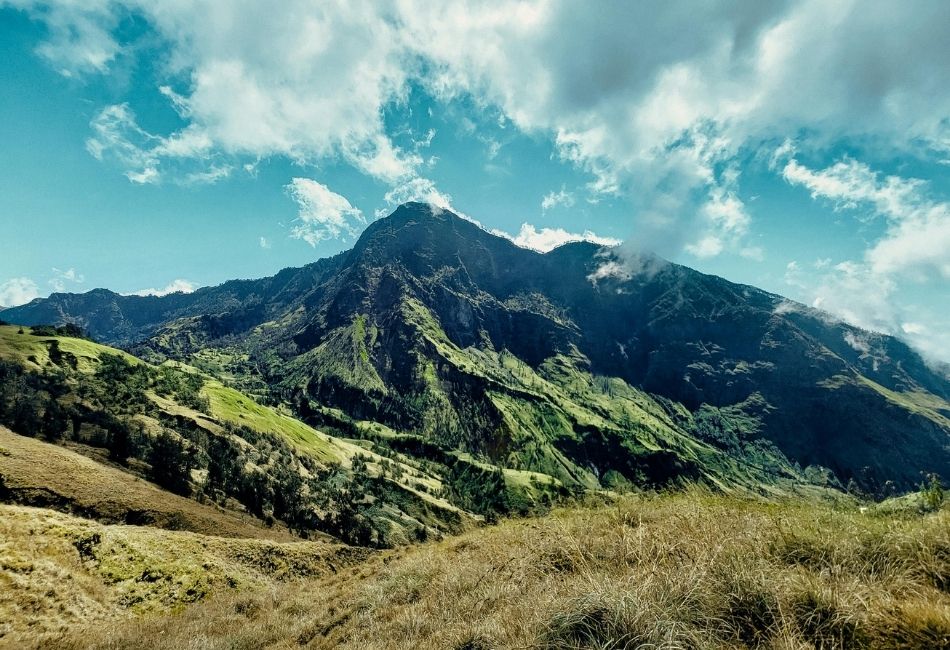
Mount Rinjani Trailheads: Sembalun, Senaru or Torean?
The trailhead matters because each route provides a different mountain experience. Sembalun is the main gateway for true-summit climbs, while Senaru and Torean are commonly associated with crater-rim, lake and traverse itineraries.
Sembalun – Best for Summit Treks
Sembalun lies on the eastern side of Mount Rinjani and is the main starting point for summit-focused routes. The trek begins through open grassland and savanna before climbing increasingly steep terrain towards Sembalun Crater Rim.
- Best for: summit attempts and classic Sembalun–lake traverses
- Landscape: open savanna, volcanic slopes and crater-rim views
- Typical route: Sembalun → Crater Rim → Summit → Lake
Senaru – Best for Crater Rim and Northern Lombok
Senaru approaches Rinjani from the north through dense tropical forest. It can be used for crater-rim and lake itineraries and is also a common exit point for mountain crossings.
- Best for: crater-rim trekking and travellers combining Rinjani with northern Lombok
- Landscape: tropical forest followed by high volcanic terrain
- Nearby attractions: Sendang Gile and Tiu Kelep waterfalls
If you are staying around Senaru before or after the trek, see our guide to the best waterfalls in Lombok.
Torean – Best for Dramatic Valley Scenery
Torean is increasingly used as an exit route for itineraries visiting Segara Anak Lake. The trail follows dramatic valleys, cliffs, rivers and waterfalls, creating a noticeably different landscape from both Sembalun and Senaru.
- Best for: full mountain traverses and hikers prioritising landscape variety
- Landscape: steep valleys, waterfalls and volcanic cliffs
- Typical use: descent after Segara Anak Lake
How to Get to Mount Rinjani
Most trekking packages arrange road transfers to Sembalun or Senaru, but travel time should still be factored into your itinerary. Arriving near the trailhead the day before the trek is preferable to combining a long road journey with the first hiking day.
| Starting Area | Approximate Transfer | Planning Advice |
|---|---|---|
| Lombok International Airport | Allow roughly 2.5–3 hours to Senaru or Sembalun depending on traffic and route | Travel to the trekking base the day before |
| Senggigi / Mataram | Approximately 2–2.5 hours | Convenient western Lombok pre-trek transfer |
| Kuta Lombok | Allow approximately 3 hours or more | Avoid starting the trek immediately after the transfer |
| Bangsal / Gili Islands gateway | Approximately 1.5–2.5 hours depending on trailhead | Useful if combining Rinjani with the Gilis |
Travel times are approximate and vary according to traffic, road conditions, accommodation location and your chosen trailhead.
If you are beginning your Lombok trip in the south, allow separate time for the best beaches in Kuta Lombok rather than trying to combine sightseeing and the Rinjani transfer on the same day.
Mount Rinjani Trekking Routes in Detail
1. Senaru Crater Rim Trek
- Typical duration: commonly 2 days 1 night for a crater-rim-focused trek
- Starting point: Senaru
- Summit: No
- Best for: experienced hikers who want a shorter Rinjani experience without the true-summit push
- Main highlight: crater-rim views towards Segara Anak Lake and Mount Barujari
- Difficulty: challenging
The Senaru Crater Rim route is a strong alternative for hikers who want to experience Rinjani’s volcanic landscape without making the 3,726-metre summit the primary objective. The trail begins inside tropical forest before climbing towards increasingly open mountain terrain.
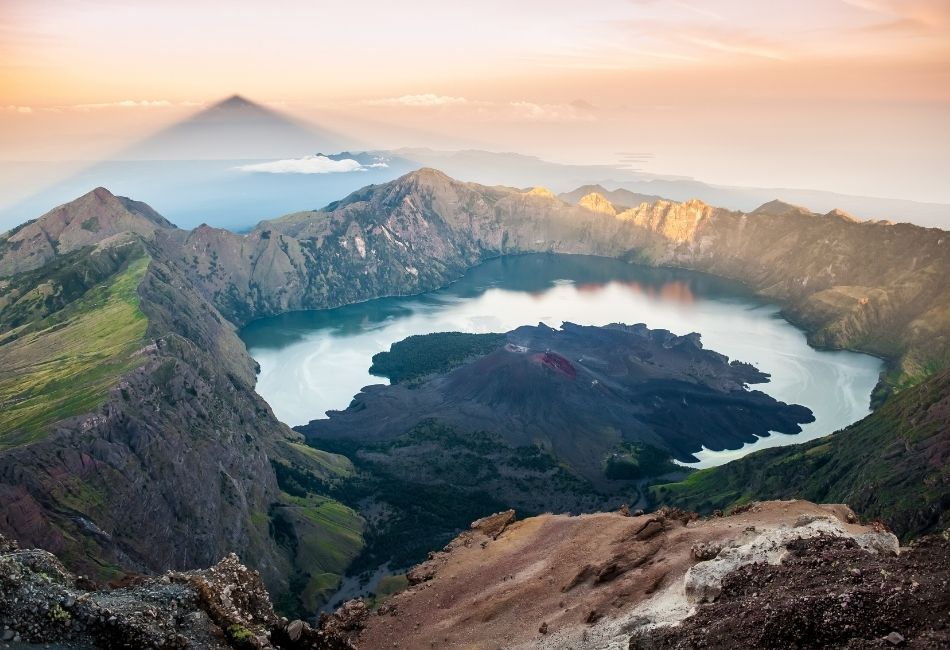
The crater rim provides expansive views into the caldera, including Segara Anak Lake and the active Barujari volcanic cone. Although there is no summit push, the route still involves sustained uphill trekking and should not be treated as an easy walk.
2. Mount Rinjani 2 Days 1 Night Summit Trek
- Route: Sembalun → Sembalun Crater Rim → Summit → Sembalun
- Duration: 2 days 1 night
- Approximate distance: around 19–20 km round trip
- Highest point: Mount Rinjani Summit, 3,726 m
- Best for: highly fit and experienced hikers with limited time
- Main highlight: sunrise from the true summit
- Difficulty: very challenging
- Essential gear: hiking shoes, warm layers, wind protection, headlamp, gloves and trekking poles
The 2 days 1 night Rinjani summit trek is the shortest conventional itinerary for reaching the summit. Day one crosses the open Sembalun landscape before climbing to the crater-rim campsite. After a short night, trekkers begin the summit push before dawn.
The final ascent is physically demanding because of loose volcanic scree and steep gradients. After reaching the summit, trekkers descend back towards Sembalun on the same day.
This route saves time but does not make the mountain easier. It also skips Segara Anak Lake and the hot springs, so it is most appropriate for travellers whose primary goal is reaching the summit.
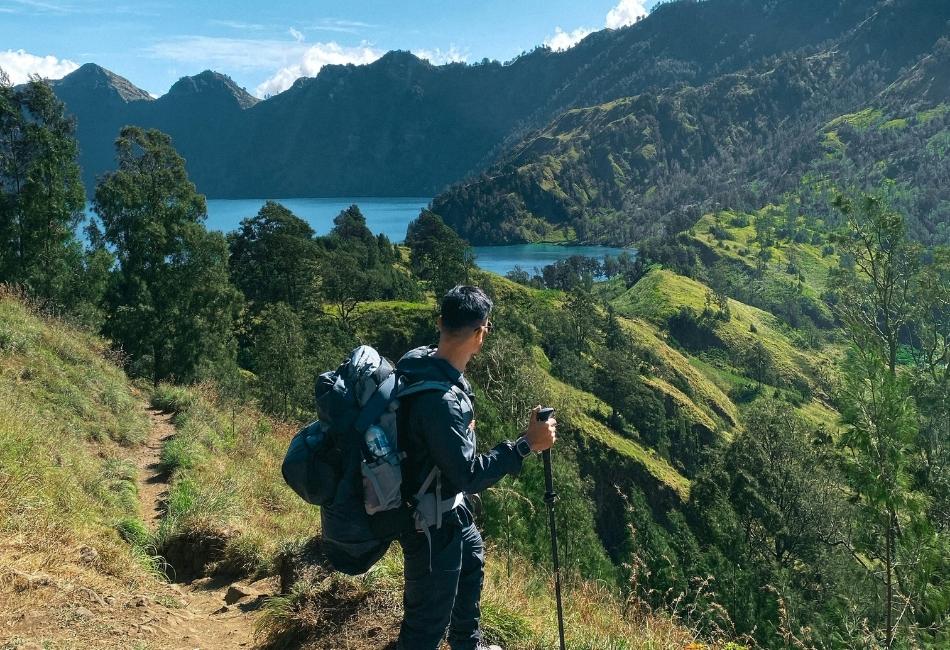
3. Mount Rinjani 3 Days 2 Nights Summit, Lake & Hot Springs Trek
- Route: Sembalun → Crater Rim → Summit → Segara Anak Lake → Senaru or Torean
- Duration: 3 days 2 nights
- Approximate distance: roughly 27.5–34 km depending on exit route
- Highest point: Mount Rinjani Summit, 3,726 m
- Best for: well-conditioned hikers wanting the classic full Rinjani experience
- Main highlight: summit sunrise, Segara Anak Lake and natural hot springs
- Difficulty: very challenging
- Essential gear: trekking footwear, warm summit layers, rain protection, headlamp, gloves and trekking poles
The 3 days 2 nights Mount Rinjani trek is the classic route for travellers who want to experience both the summit and the volcanic caldera. After camping at Sembalun Crater Rim, trekkers attempt the summit before dawn and later descend towards Segara Anak Lake.
The second day is often the most demanding because the summit attempt is followed by substantial descent into the crater and further movement towards the next campsite.
Segara Anak changes the character of the trek completely. Instead of exposed volcanic ridge, hikers enter the vast caldera containing the blue-green lake, Mount Barujari and nearby natural hot springs.
For travellers looking for this complete route, see the Mount Rinjani Summit Trekking Tour.
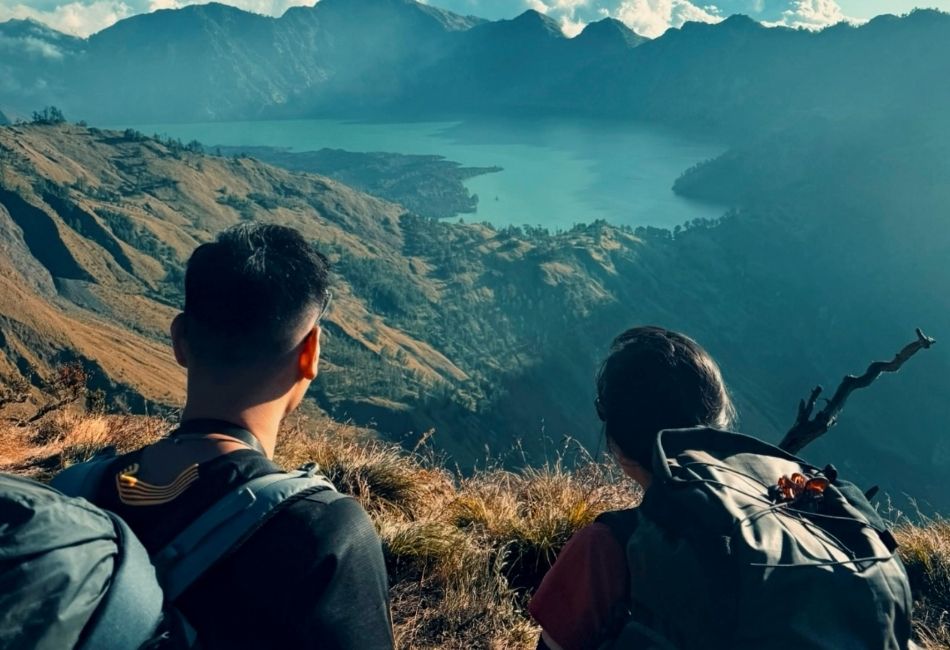
4. Mount Rinjani 4 Days 3 Nights Extended Trek
- Route: typically Sembalun → Crater Rim → Summit → Segara Anak Lake → Senaru or Torean
- Duration: 4 days 3 nights
- Highest point: Mount Rinjani Summit, 3,726 m
- Best for: experienced hikers who want additional recovery and photography time
- Main highlight: summit, lake and crater landscapes with less compressed daily stages
- Difficulty: challenging to very challenging
- Essential gear: full summit trekking equipment plus additional personal layers for another mountain night
The 4 days 3 nights Mount Rinjani trek covers many of the same landscapes as the classic 3-day itinerary but distributes the journey across an additional day. This creates more time for recovery around Segara Anak Lake, the hot springs and mountain camps.
The extra day does not remove the difficulty of the summit or steep crater trails. Instead, the main advantage is pacing. Experienced hikers who prefer photography, longer rest periods and less compressed mountain days may find this option more enjoyable.
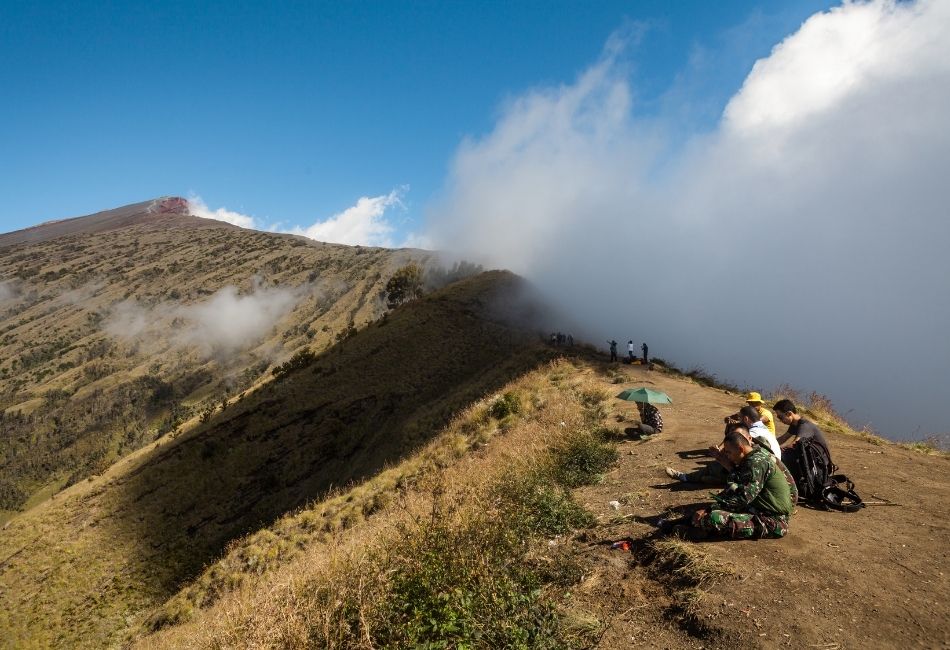
What to Pack for Mount Rinjani Trekking
Organised trekking packages usually provide major camping equipment, meals and porter support, but your personal clothing and trekking equipment still have a major impact on comfort and safety.
- Hiking shoes: sturdy footwear with reliable grip for loose volcanic terrain.
- Warm layers: summit temperatures before sunrise can feel very cold.
- Windproof jacket: important on exposed ridges and during the summit climb.
- Rain protection: mountain weather can change even during the drier months.
- Headlamp: essential for the pre-dawn summit attempt.
- Trekking poles: particularly useful on loose scree and long descents.
- Gloves and beanie: useful for cold summit conditions.
- Sun protection: hat, sunglasses and sunscreen for exposed sections.
- Reusable water bottle: required under current National Park waste-reduction guidance.
- Personal medication: carry anything you may require during the trek.
- Power bank: there is no regular charging infrastructure on the mountain.
- Small daypack: use it for water, layers, snacks and personal items while porters manage shared camp equipment where included.
Essential Mount Rinjani Trekking Safety Tips
- Use authorised trekking services: permits, guides, trail registration and emergency procedures should be organised correctly.
- Respect altitude: 3,726 metres is high enough for some hikers to experience headache, nausea, dizziness or reduced performance.
- Follow your guide’s decision: wind, poor visibility, illness or exhaustion can make turning around the safest choice.
- Keep a steady pace: conserving energy on the first day is more useful than reaching camp quickly and exhausting yourself before the summit.
- Protect your knees: use trekking poles and controlled steps during long descents.
- Stay on official trails: shortcuts increase erosion and accident risk.
- Carry out waste: Rinjani’s popularity places significant pressure on mountain camps and trails.
- Respect fire restrictions: vegetation can become extremely dry during the dry season.
- Never trek during official closures: closures are introduced for safety and ecosystem protection.
Where to Stay Before and After Mount Rinjani
For summit routes beginning in Sembalun, spending the previous night around Sembalun makes an early trail start much easier. Travellers using northern routes can instead stay around Senaru.
A recovery day after trekking is strongly recommended. Lombok offers several natural ways to slow the pace before continuing your trip:
- Visit the best waterfalls in Lombok around Senaru and northern Lombok.
- Travel south and relax at the best beaches in Kuta Lombok.
- Choose somewhere to recover over a good meal using our guide to the best restaurants in Lombok.
- Continue with the Gili Islands, Sasak villages and other experiences in our guide to the best things to do in Lombok.
How to Include Mount Rinjani in a Lombok Itinerary
Rinjani works best when the trek is given enough space within your wider Lombok holiday. Avoid placing it immediately between long transfers or other demanding outdoor activities.
A practical travel sequence could look like this:
- Days 1–2: Kuta Lombok and South Lombok beaches
- Day 3: transfer to Sembalun and pre-trek briefing
- Days 4–6: 3-day Mount Rinjani trek
- Day 7: recovery around Senaru or Senggigi
- Days 8 onward: Gili Islands, waterfalls or wider Lombok exploration
Travellers planning a longer island journey can browse Lombok tour packages combining mountain trekking with beaches, waterfalls, Sasak culture and the Gili Islands.
Plan Your Mount Rinjani Trek
Choose your Rinjani route according to your fitness, trekking experience and whether your priority is the 3,726-metre summit, Segara Anak Lake or a more gradual mountain journey.
Frequently Asked Questions About Mount Rinjani Trekking
How hard is Mount Rinjani trekking?
Mount Rinjani trekking is challenging to very challenging. Summit routes involve substantial elevation gain, long hiking days, loose volcanic scree and cold pre-dawn conditions. Good fitness and previous mountain-hiking experience are important.
How many days do you need to trek Mount Rinjani?
Most travellers choose between two and four days. A 2 days 1 night trek can focus on either the summit or crater rim, while 3 days 2 nights is the classic option for combining the summit with Segara Anak Lake and the hot springs. Four days provides more recovery time.
Which Mount Rinjani trekking route is best?
For the most complete experience, the 3 days 2 nights summit and lake route is generally the strongest option for well-conditioned hikers. The 2-day summit trek suits experienced hikers with limited time, while Senaru Crater Rim is useful for travellers who do not need to reach the true summit.
Can beginners trek Mount Rinjani?
Rinjani should not be treated as a first-ever mountain hike. Current National Park guidance requires previous mountain-hiking experience. A longer itinerary may reduce the daily pace, but the terrain itself remains demanding.
Do you need a guide for Mount Rinjani?
Visitors must follow current Gunung Rinjani National Park requirements regarding trekking guides and authorised trekking services. A qualified guide is also important for route navigation, weather decisions and emergency procedures.
Do you need a permit to climb Mount Rinjani?
Yes. Mount Rinjani lies inside Gunung Rinjani National Park, and official registration is required. Trekking quotas and booking procedures apply according to current National Park rules.
Do you need a health certificate for Mount Rinjani?
Yes. The official trekking SOP requires a health certificate confirming fitness for trekking, issued no more than three days before the trek begins.
What is the best time to climb Mount Rinjani?
April to October generally provides the most favourable trekking conditions because it overlaps with Lombok’s drier season. However, official opening periods, wildfire risk and temporary safety closures should always be checked for your specific travel dates.
Is Mount Rinjani open all year?
No. Trekking routes close periodically because of wet-season conditions, ecosystem recovery, wildfire risk or other safety concerns. In 2026, all official trekking destinations were closed from 1 January to 31 March, while a limited-opening policy began on 1 September because of increased forest-fire risk.
How much does a Mount Rinjani trek cost?
Prices depend on the route, duration, group size and level of service. As of October 2026, Indonesia Impression Tour lists representative 3-day Rinjani trekking programs from approximately USD 350–375. Always check the current tour page for updated pricing and inclusions.
Is the 2-day or 3-day Mount Rinjani trek better?
The 2-day route is better for highly fit travellers focused primarily on the summit. The 3-day route is usually more rewarding for travellers who want the full Rinjani experience because it can combine the summit, Segara Anak Lake and hot springs.