Best surf spots Bali searches lead to a wide mix of warm-water waves across the Bukit Peninsula, west coast, and east coast. Bali has soft beach breaks for learners, long mellow lefts for progressing surfers, and shallow reef barrels for advanced riders. However, wave conditions, tide windows, season, and skill level change sharply from one break to another. This guide compares 8 Bali surf spots with structured wave data, helping surfers choose where to paddle out safely and realistically.
What to Know Before Choosing a Surf Spot in Bali
Surfing in Bali works year-round, but each coastline responds differently to season, swell direction, wind, tide, and reef shape. Instead of choosing a break only because it is famous, surfers should match the spot to their current ability, board choice, and travel month.
From around April or May to October, dry season surfing Bali is usually strongest on the west coast and Bukit Peninsula. This window favors Uluwatu, Padang Padang, Bingin, Impossibles, Canggu, and Medewi, especially when south or southwest swells meet east to southeast offshore winds. From November to March, wet season surfing Bali becomes more useful on east-coast breaks such as Keramas, Sanur, and Nusa Dua.
Many famous Bali reef breaks sit over coral or volcanic rock, especially around the Bukit Peninsula. These waves are faster, shallower, and less forgiving than sandy or mixed-bottom breaks. Kuta, Batu Bolong, and Baby Padang suit beginners better, while Uluwatu, Padang Padang Left, Bingin, and Keramas demand stronger positioning, reef awareness, and confident takeoffs.
1. Uluwatu Beach
- Location: Pecatu, South Kuta, Badung Regency, Bali 80361, Indonesia
- Wave Type: Uluwatu is a world-famous, highly consistent left-hand reef break. It has five main peaks, including The Peak, Racetracks, Outside Corner, Temples, and Bombie, with fast walls, hollow barrels, and large open faces depending on swell size.
- Skill Level: Advanced to expert. Indian Ocean swell power, sharp reef exposure, competitive crowds, and strong currents make the takeoff zone demanding. Higher tides can occasionally soften the walls for experienced intermediates.
- Best Season: Dry season, from April to October. Uluwatu works best on south, southwest, and west swells with east to southeast offshore trade winds.
- Best Tide: All tides. Mid to high tide gives deeper water and thicker walls, while low tide makes Racetracks faster, hollower, and much shallower.
- Entry and Exit: Surfers enter through the Uluwatu Cave after walking down cliff stairs. Timing matters because currents can pull surfers toward Racetracks, and high-tide exits can surge hard against the cliff walls.
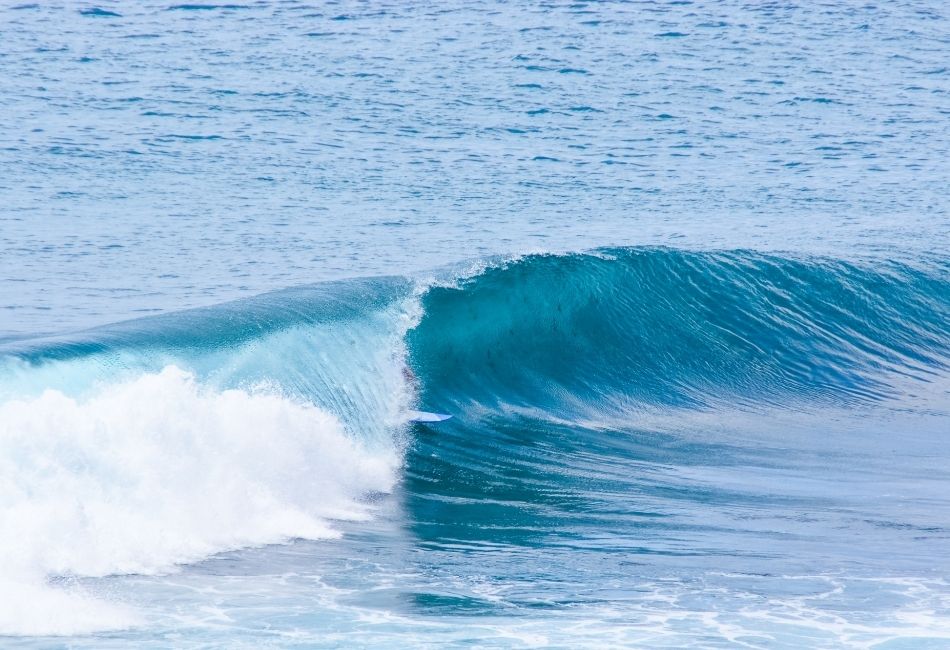
Uluwatu surf is Bali’s benchmark reef break, known for consistency, multiple takeoff zones, and dramatic clifftop warungs overlooking the lineup. It belongs in any Bali surf guide because it can hold everything from shoulder-high walls to serious overhead swell. Crowds run from dawn to sunset, so etiquette matters. After surfing, many travellers pair the session with things to do in Uluwatu around the cliffs and temple area.
2. Padang Padang Beach
- Location: Pecatu, South Kuta, Badung Regency, Bali, Indonesia
- Wave Type: Padang Padang Left is a heavy left-hand reef break with steep drops and deep barrels. Inside the bay, Baby Padang offers softer right and left waves over mixed sand and coral.
- Skill Level: Expert for Padang Left, beginner to intermediate for Baby Padang. The main reef is shallow and powerful, while Baby Padang is slower, smaller, and more protected.
- Best Season: Dry season, from April to October. It performs best on large south and southwest swells with southeast offshore winds.
- Best Tide: Mid to low tide for Padang Left, although very low tide becomes dangerous. Baby Padang is better on mid to high tide.
- Entry and Exit: Access runs down a narrow cliff stairway through limestone. Surfers paddle from the sandy beach through a channel, but the outgoing tide can make the return paddle harder.
Padang Padang surf has two personalities, which makes it one of Bali’s most distinctive breaks. The main left is a world-class barrel for experts, while Baby Padang gives newer surfers a sheltered training zone inside the bay. This contrast makes the beach useful for mixed-skill groups. On bigger days, the expert lineup becomes tight and intense, so less confident surfers should stay inside.
3. Bingin Beach
- Location: Bali, Indonesia
- Wave Type: Bingin is a short, mechanical left-hand reef break with a steep takeoff, tight barrel, and brief performance shoulder.
- Skill Level: Advanced to expert. The wave is predictable, but the takeoff zone is tiny, crowded, and shallow, making it difficult for intermediates to position safely.
- Best Season: Dry season, from April to October. Bingin works well on standard southwest groundswell with east to southeast offshore trade winds.
- Best Tide: Mid tide is the best window. High tide can soften the wave, while low tide exposes sharp coral and turns the barrel more critical.
- Entry and Exit: Surfers descend steep concrete cliff steps to the beach, then paddle roughly 100 meters across a shallow lagoon. At low tide, reef walking requires care.
Bingin surf is famous because the wave folds over the reef with near-machine precision. It deserves a place among advanced surf spots Bali because it offers one of the Bukit’s most accessible tube-riding setups, provided the surfer has fast reflexes and strong reef confidence. The beach atmosphere stays intimate, with simple warungs facing the lineup, but the small takeoff zone makes respectful rotation essential.
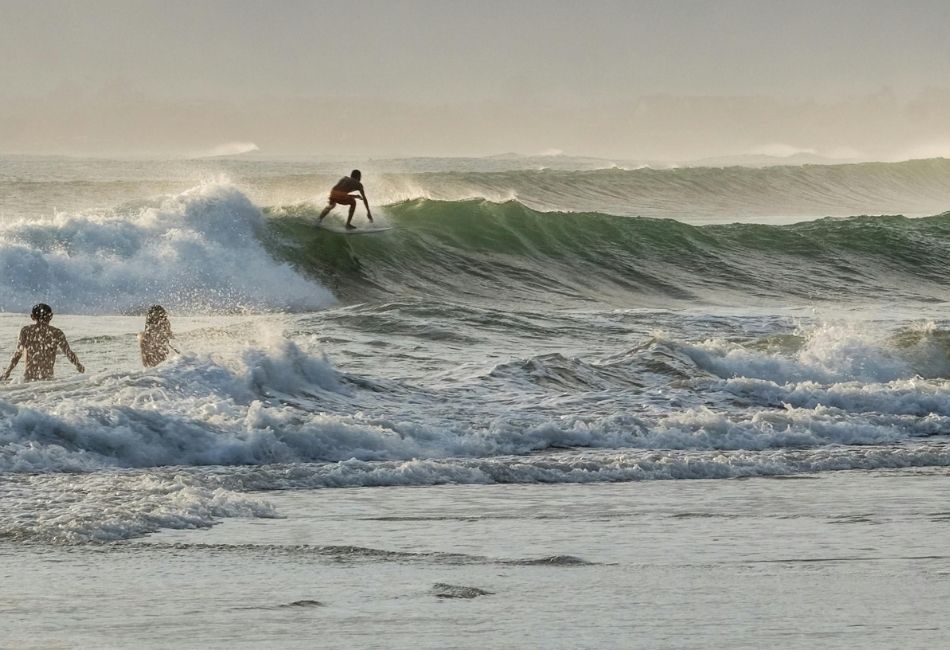
4. Impossibles Beach
- Location: 54R4+CWW, Bukit Peninsula, South Kuta, Badung Regency, Bali 80361, Indonesia
- Wave Type: Impossibles is an ultra-fast left-hand reef break over a flat coral platform. On large swells, its three sections can link into a long racing wall.
- Skill Level: Intermediate to advanced. The reef is less intimidating than Padang Padang, but the wave moves quickly and punishes slow section reading.
- Best Season: Dry season, from April to October. It needs solid west or southwest groundswell with east to southeast offshore winds.
- Best Tide: All tides, although mid to low tide is preferred. Low tide adds speed and shape, while high tide slows the wave and strengthens currents.
- Entry and Exit: Access usually comes through cliff paths near Bingin or Padang Padang. On heavier days, many surfers paddle from Padang Padang’s deeper channel and drift toward the peaks.
Impossibles in Bali gets its name from the challenge of making its fast sections. It is useful in a Bali surf guide because the playing field stretches across a wide reef, spreading crowds better than Bingin or Uluwatu. Strong surfers who enjoy speed, long walls, and tactical positioning will get the most value here. Beginners should avoid it because the pace leaves little recovery time.
5. Canggu Beach
- Location: Canggu, Kuta Utara, Badung Regency, Bali, Indonesia
- Wave Type: Canggu offers lefts and rights across soft reef and black-sand beach breaks. Batu Bolong has mellow longboard waves, while Echo Beach and Pererenan offer faster, punchier peaks.
- Skill Level: All levels. Beginners can use Batu Bolong’s softer whitewater, while intermediates and advanced surfers move toward Echo Beach or Pererenan.
- Best Season: Dry season, from April to September. Cleanest sessions often happen early with south to southwest swell and light offshore wind.
- Best Tide: Mid to high tide. Higher water covers the inside of the reef and rocks, while low tide makes some sections less forgiving.
- Entry and Exit: Batu Bolong uses a direct sandy paddle-out. Echo Beach and Pererenan often use channels, but surfers should watch shallow rocks and stronger inside currents.
Canggu surf suits mixed-ability groups because one coastal strip offers longboard waves, beginner foam, and punchier shortboard peaks. Batu Bolong is the easiest entry point, while Echo Beach gives stronger surfers more speed and consequence. The beach scene is busy, social, and surf-school friendly. Travellers who want surfing plus cafes, markets, and nightlife can connect sessions with things to do in Canggu.
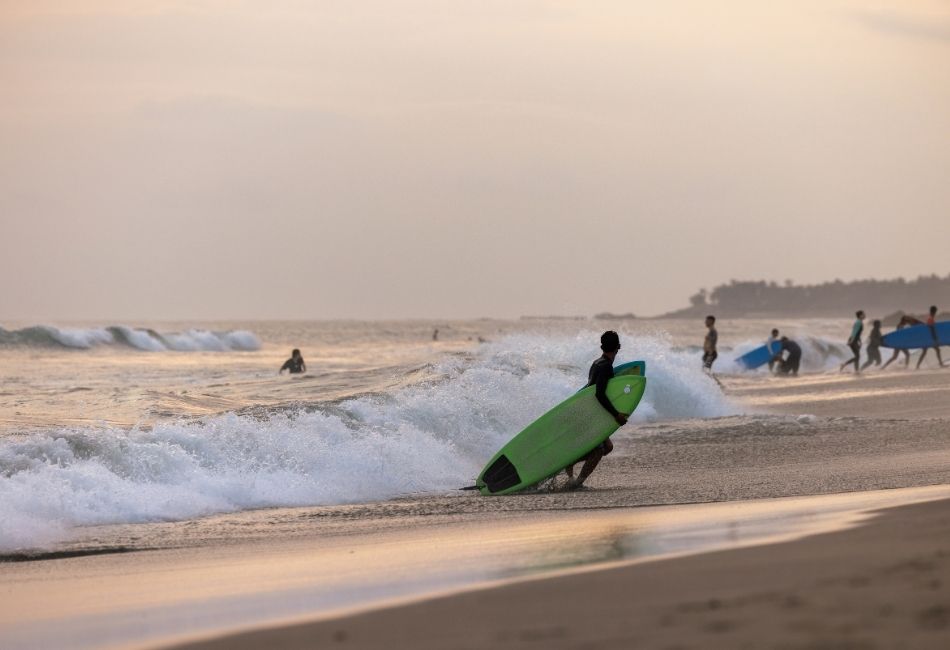
6. Medewi Beach
- Location: Jl. Pantai Medewi, Medewi, Kec. Pekutatan, Kabupaten Jembrana, Bali, Indonesia
- Wave Type: Medewi is a long left-hand point break over cobblestone, known for mellow open faces that can run for hundreds of meters.
- Skill Level: Intermediate to advanced. The wave is forgiving once riding, but slippery rocks and river-mouth currents make it unsuitable for absolute beginners without guidance.
- Best Season: Dry season, from April to October. The headland protects it better than many west-coast spots, especially on south to southwest swell.
- Best Tide: Mid to high tide. Fuller tides improve shape and keep surfers above the boulder-strewn bottom. Low tide exposes barnacles and sharp rocks.
- Entry and Exit: Entry involves careful rock scrambling before paddling through a deeper channel. Exiting requires timing to avoid being pushed into coastal boulders.
Medewi surf is Bali’s classic long left, ideal for surfers who want distance, rhythm, and fewer southern crowds. It differs from Bukit reef breaks because the wave is more open-faced and less vertical. The rural west-coast atmosphere feels slower, making Medewi a strong choice for intermediate surfers building trim, cutback, and wave-reading skills. Reef booties are useful because the shoreline rocks can be sharp.
7. Keramas Beach
- Location: Jl. Prof. Dr. Ida Bagus Mantra No.80551, Keramas, Kec. Blahbatuh, Kabupaten Gianyar, Bali, Indonesia
- Wave Type: Keramas is a fast right-hand reef break over volcanic rock, producing hollow barrels and a rippable performance wall.
- Skill Level: Advanced to expert. Heavy takeoffs, shallow rock, and fast sections require precise positioning and strong tube-riding ability.
- Best Season: Wet season, from November to March. West to northwest offshore winds groom east-coast swell into cleaner faces.
- Best Tide: Mid to incoming high tide. Higher water makes barrels more manageable, while low tide exposes dangerous rock and creates harder closeouts.
- Entry and Exit: Surfers paddle from black sand near Komune Resort and use a natural deep-water channel beside the breaking peak.
Keramas Beach is Bali’s premier high-performance right-hander, known for power, speed, and professional-level sections. It stands out because many Bali classics are left, while Keramas offers a rare right reef with barrel and aerial potential. The lineup can be heavy, so dawn patrol is the smartest call for cleaner wind and fewer people. Low tide should be treated seriously because the volcanic reef becomes hazardous.
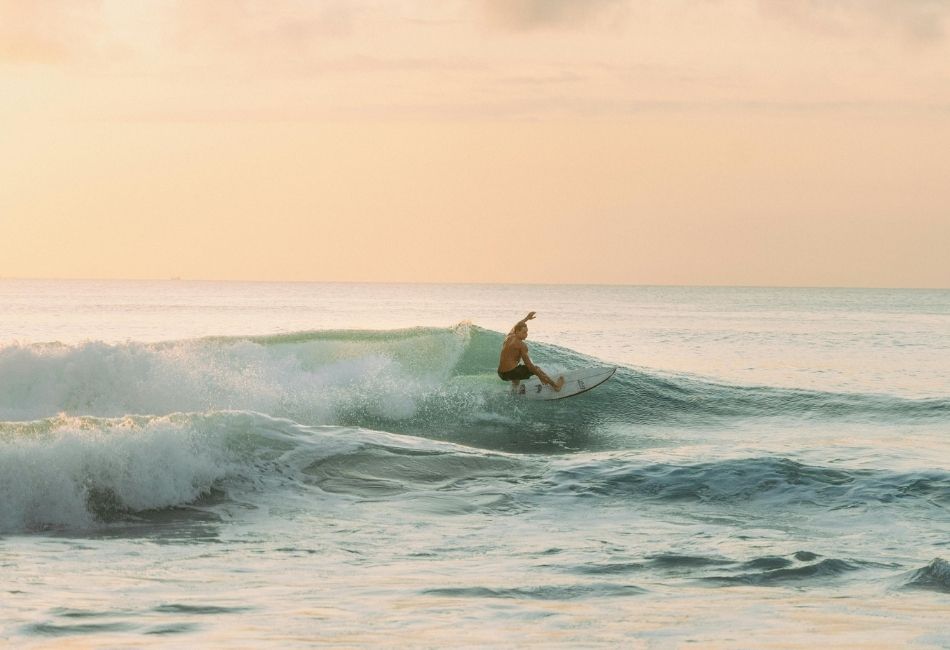
8. Yeh Gangga Beach
- Location: Desa Jl. Yeh Gangga I, Kec. Tabanan, Kabupaten Tabanan, Bali, Indonesia
- Wave Type: Yeh Gangga is a left and right-hand beach break over volcanic sand and rock, with punchy, shifting peaks and hollow sections.
- Skill Level: Intermediate to advanced. The wave is powerful, fast, and often affected by rip currents, so beginners should not treat it as a swimming beach.
- Best Season: Dry season and transition months, especially March, April, October, and November. It responds well to southwest groundswell and early offshore wind.
- Best Tide: Mid to high tide. More water helps the peaks hold shape and prevents fast closeouts over shallow banks and rocks.
- Entry and Exit: Surfers paddle from black sand through a strong inside shorebreak. Reaching the outer lineup requires timing, strength, and awareness of undertow.
Yeh Gangga surf is a raw Tabanan option for surfers who want fewer crowds and a heavier beach-break challenge. It belongs in this guide because it can produce strong, punchy waves when more famous areas are crowded or inconsistent. The setting feels open and undeveloped, with rice fields, temples, and black sand nearby. There are no lifeguards, and currents can be severe, so swimming is discouraged.
Surf Lessons and Classes in Bali Worth Knowing About
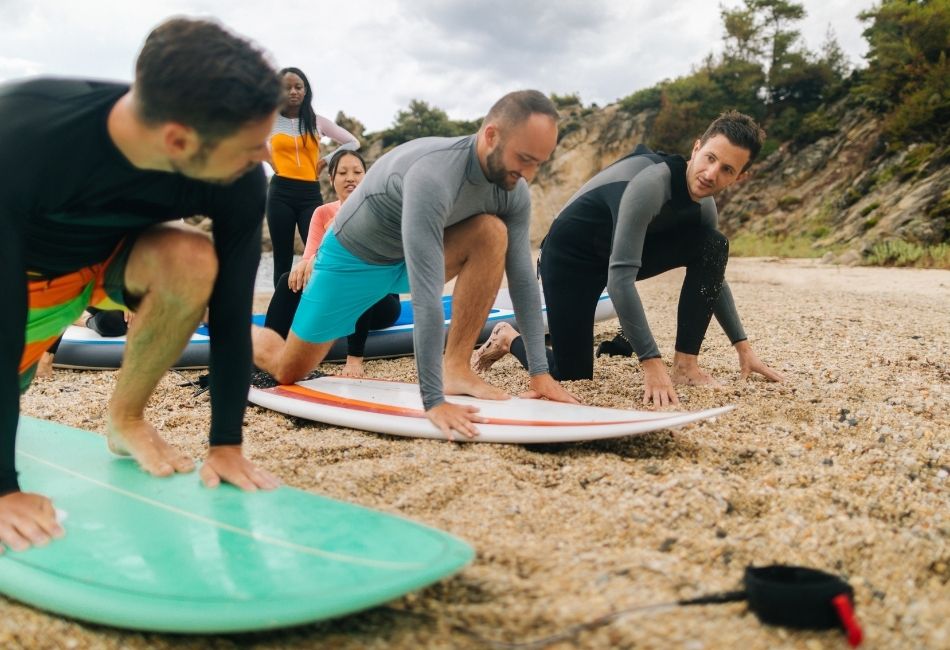
Structured Bali surf lessons are available across major surf zones, from soft sandy beach breaks to reef-focused coaching with video analysis. Choosing a class near the right wave for your current level produces better progress than booking a generic lesson at the nearest beach.
- Bali Beginner and Intermediate Surf Lesson in Canggu: A structured lesson at Canggu covering on-land technique before moving into the water. Instructors assess each student’s level on arrival and adjust the session accordingly, making it one of the more adaptable class formats available for visitors who are unsure where their skills currently sit.
- Seminyak Surf Lesson for All Levels, Small Group or Private: A 2.5-hour session operating out of Double Six Beach in Seminyak, with an option to choose beginner, intermediate, or advanced tracks on booking. Instructors adjust the surf spot based on daily conditions, moving between east and west coast breaks as needed. Proceeds support a local orphanage run by the instructors, which adds a meaningful local dimension to the booking.
- Canggu Surf School Bali: A certified surf school operating on Canggu Beach, offering both private and group formats. Instructors are certified, and sessions are tailored to skill level, covering wave reading, paddling, and basic turning technique. A practical option for travelers who want flexibility in group size and scheduling during a short Bali stay.
Practical Tips for Surfing in Bali
Regardless of skill level, a few practical preparations improve surfing in Bali and reduce injury risk, lineup conflict, and missed sessions. Plan around tides, reef exposure, traffic, and board choice before committing to any break.
- Wear reef booties: Many famous Bali breaks sit over sharp coral or volcanic rock, so booties help prevent cuts at shallow reef spots.
- Check the forecast: Review swell height, swell period, wind direction, and tide charts the night before choosing where to surf.
- Scout the conditions: Watch the waves for 10 to 15 minutes before paddling out to identify sets, currents, entry points, and exit channels.
- Respect surf priority: The surfer closest to the peak has right of way. Do not drop in or paddle around locals to take priority.
- Choose the right board: Match boards to conditions, using a step-up for bigger surf, a fish for smaller waves, or a longboard for mellow breaks.
- Pack reef-cut supplies: Carry antiseptic, wound pads, and waterproof tape because reef cuts can become infected quickly in Bali’s tropical climate.
- Plan around traffic: Leave early for morning sessions to avoid heavy traffic and catch cleaner wind before mid-morning.
Plan Your Bali Surf Trip with Indonesia Impression Tour
A strong Bali surf trip depends on matching the right breaks with the right travel window, accommodation base, transport plan, and skill progression. The Bukit Peninsula, Canggu, Medewi, and the east coast all serve different surfers, so choosing one area without considering season and ability can turn a promising trip into a frustrating one.
Indonesia Impression Tour, a travel agency in Bali, Indonesia, can build locally grounded custom itineraries around surf priorities, including accommodation near chosen breaks, driver logistics, lesson planning, and wider Bali experiences for non-surfing companions. Whether you want reef breaks in Uluwatu, social surf in Canggu, or wet-season rights on the east coast, book Indonesia Impression Tour to shape a Bali surf route around your dates and comfort level.
Explore more: